At ITR, we take a broader view.
While many service providers build their programs around a single technology, ITR’s approach is built on a holistic reliability framework, an integrated suite of predictive maintenance solutions and diagnostic tools that work together to deliver total asset clarity.
A Broader Diagnostic Toolkit
Effective predictive maintenance (PdM) requires examining assets from multiple angles. Here’s how each technology in our suite addresses failure modes that vibration analysis misses:
Oil Analysis: Vibration may indicate that a bearing is degrading, but oil analysis can tell you why. By evaluating wear debris, viscosity changes, and chemical contamination, oil analysis identifies lubricant breakdown and coolant intrusion, root causes that often drive the mechanical symptoms captured by vibration sensors. It’s particularly effective at detecting “silent” failure modes like chemical contamination before they produce any measurable mechanical signal.
Infrared Thermography: Heat is an early and reliable indicator of both mechanical friction and electrical resistance. Infrared thermography allows technicians to detect problems — loose electrical connections, misaligned couplings, overloaded components — that produce thermal signatures well before they generate detectable vibration. It’s a fast, non-invasive technology that provides immediate visual confirmation of distress.
Airborne Ultrasound: Bearing degradation generates high-frequency acoustic energy long before the mechanical movement reaches the threshold of standard vibration detection. Airborne ultrasound captures this early-stage signal, providing additional lead time for intervention. It also serves as a primary diagnostic tool for compressed air and vacuum leaks — energy losses that are often invisible to other technologies but can represent thousands of dollars in wasted operating costs annually.
Electrical Motor Testing (EMT): Vibration analysis is well-suited to mechanical faults but provides limited insight into the electrical health of a motor. EMT evaluates insulation resistance, rotor bar integrity, and power quality, factors that, when left unmonitored, can lead to catastrophic winding failures. In most plants, motors are among the highest-consequence assets on the floor; EMT ensures their electrical condition is tracked with the same rigor as their mechanical performance.
Motion Amplification (MA): Some failure modes, structural resonance, base-plate looseness, torsional flex, are difficult to characterize with point sensors alone. Motion Amplification technology converts every pixel of a high-definition video feed into a displacement sensor, making tiny movements visible at scale. The result is a detailed, real-time picture of how a machine is actually moving — information that accelerates root cause analysis and helps validate corrective actions.
A Tiered Hardware Strategy
Collecting data from multiple technologies is only useful if that data is structured, accessible, and actionable. ITR deploys a hybrid hardware ecosystem designed to match monitoring intensity to asset criticality:
Condition Monitoring & Analysis System (CMAS): For your highest-criticality assets, the CMAS provides continuous, deep-dive monitoring with direct access to ITR’s analyst team. These are the machines where a missed anomaly carries the greatest operational and financial consequence — and they’re monitored accordingly.
Wireless Sensor Network (WSN): For stable, constant-speed, constant-load assets, the WSN delivers continuous cloud-based monitoring with configurable alerting. These sensors provide persistent coverage without requiring dedicated analyst attention, making them a cost-effective solution for Tier 2 and Tier 3 equipment.
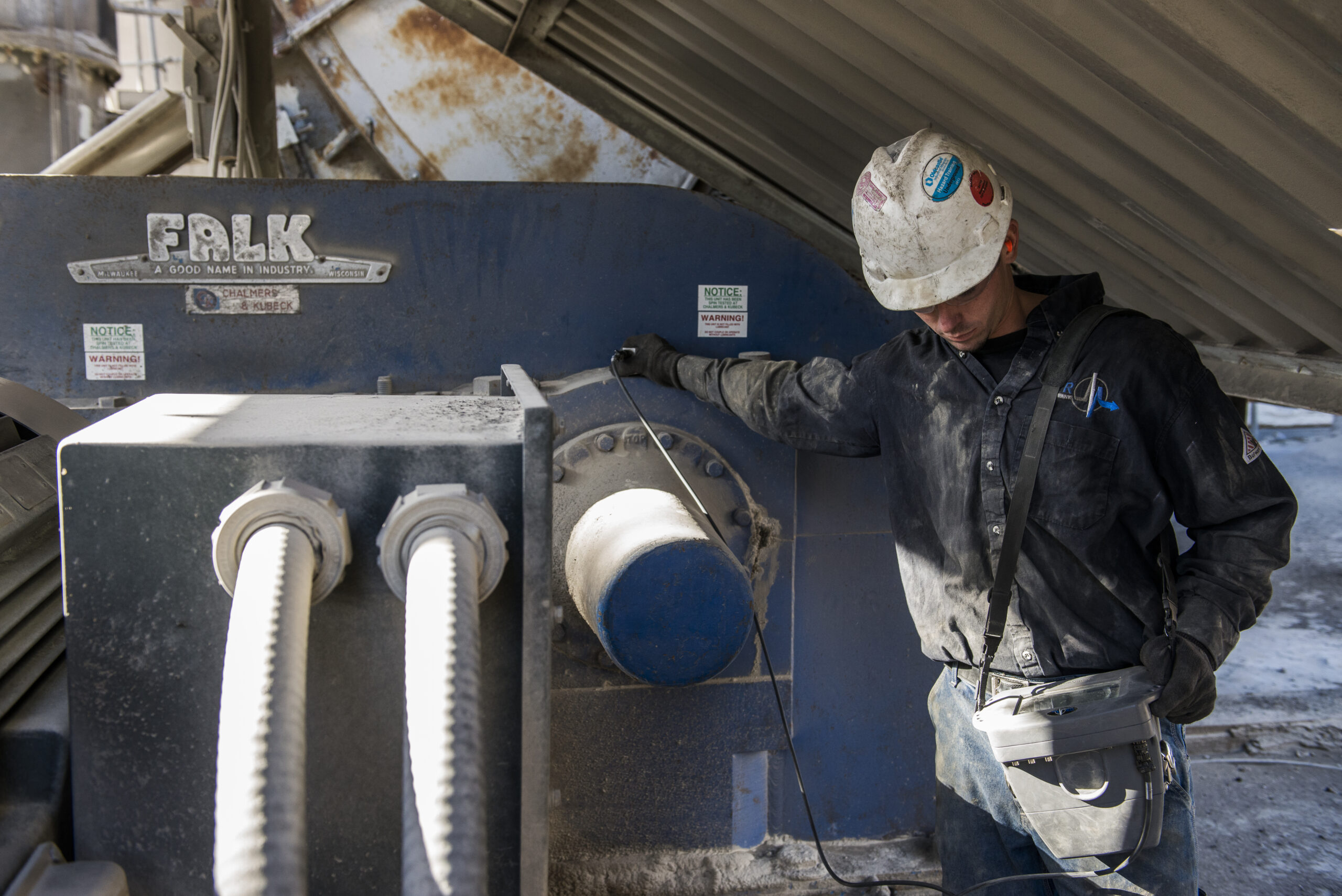
Data Collection Unit (DCU): The DCU is used for periodic precision measurements and as a human-in-the-loop verification tool when automated alerts require further investigation. It extends monitoring capability to areas where wireless sensors aren’t practical and ensures that automated diagnoses are validated before action is taken.
The Case Against Single-Technology Programs
Many competitors offer vibration monitoring as a complete PdM solution. In practice, this means customers receive sensor hardware, a software subscription, and the expectation that they’ll interpret the data themselves. That approach has real limitations: electrical, thermal, and chemical failure modes, which account for a substantial proportion of industrial failures — go undetected entirely.
Reliability is not primarily a software problem. It’s a physics and engineering problem, and it requires a diagnostic strategy that reflects the full complexity of how industrial assets actually fail.
ITR brings together multi-technology diagnostics, a tiered hardware deployment model, and experienced analysts who synthesize data across all inputs. The outcome isn’t more charts — it’s clearer answers and earlier intervention.
Conclusion
A modern predictive maintenance program needs to account for the full range of failure modes your assets are subject to — mechanical, electrical, thermal, and chemical. By integrating vibration analysis with oil, infrared, ultrasonic, and electrical diagnostics, ITR delivers a level of asset visibility that single-technology programs cannot match.
For facilities that take reliability seriously, the choice is straightforward: comprehensive, multi-technology monitoring, or accepting the gaps that come with anything less.